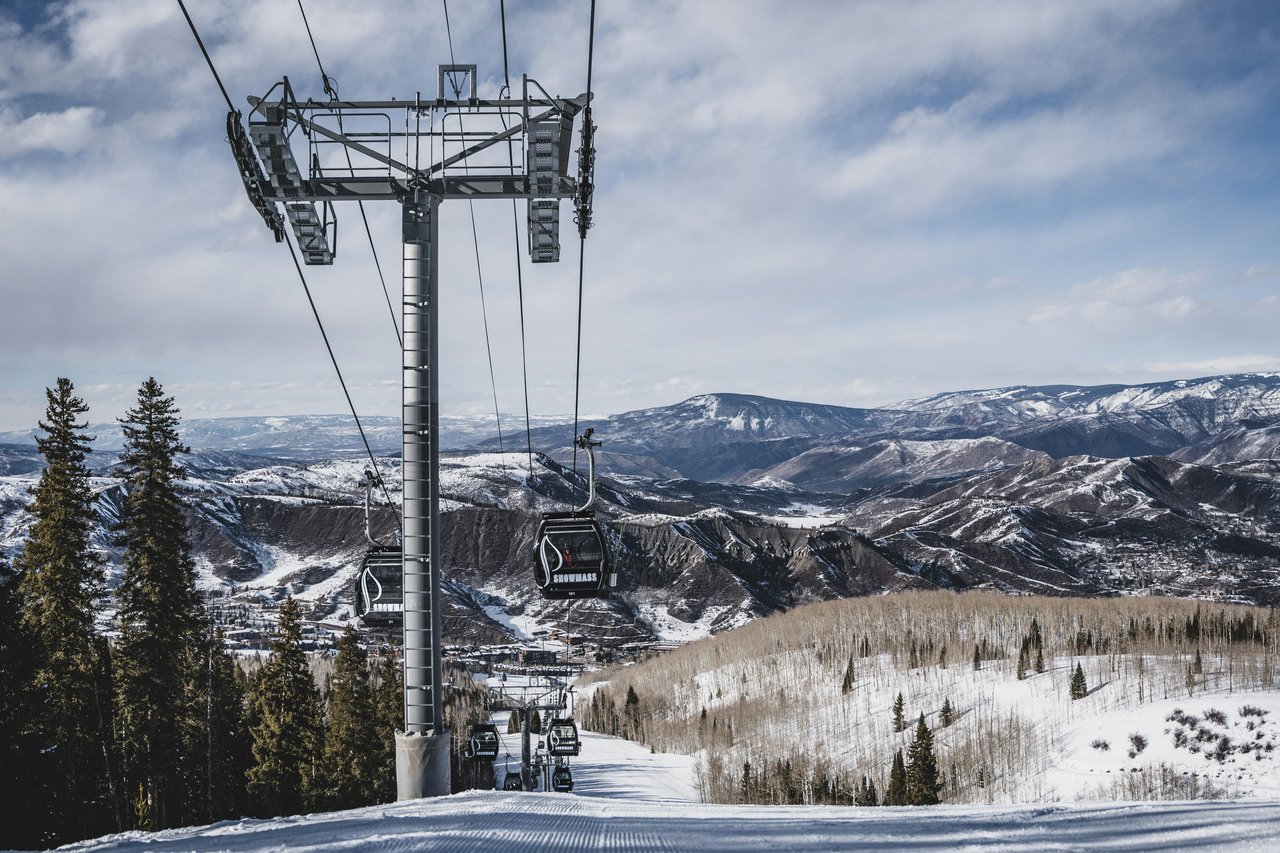
Aspen has recorded 26 single-family closings through the first half of 2026. Sales and dollar volume are running well behind recent years, while prices have held.
Fewer Sales, Longer Timelines
Full-year closings have run between 65 and 79 every year since 2022. Even a strong summer would leave 2026 short of that range. Dollar volume is off just as sharply, at $381.48M year to date against full-year totals that have landed between $1.27B and $1.41B for four consecutive years.
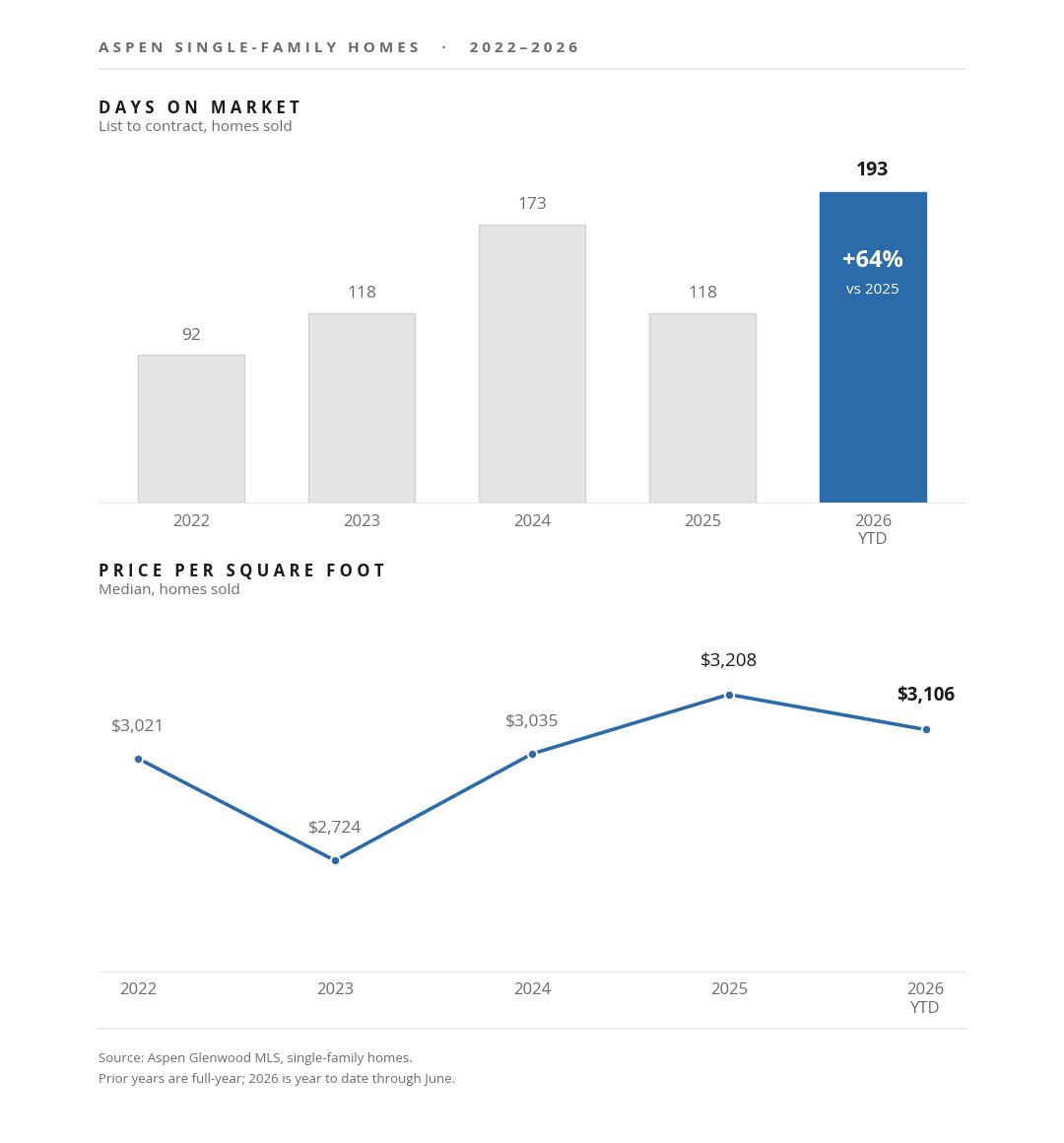
Homes are also taking longer to sell. Days on market for closed sales has stretched to 193 so far this year, up from 118 in 2025 and the highest since 2020. That number only reflects homes that sold. Listings that are overpriced and still sitting don't count toward it, which means the slowdown is worse than 193 days suggests.
Value Has Held
Price per square foot sits at $3,106 so far this year, down about 3% from 2025's $3,208 and above 2024's $3,035. Median sale price came in at $12,275,000, down from $14,000,000 last year, though the median mostly reflects which homes happened to sell. With a sample of only 26 sales, it can move without values actually falling. Price per foot is the cleaner signal, and it's holding near its record.
Quality Is the Dividing Line
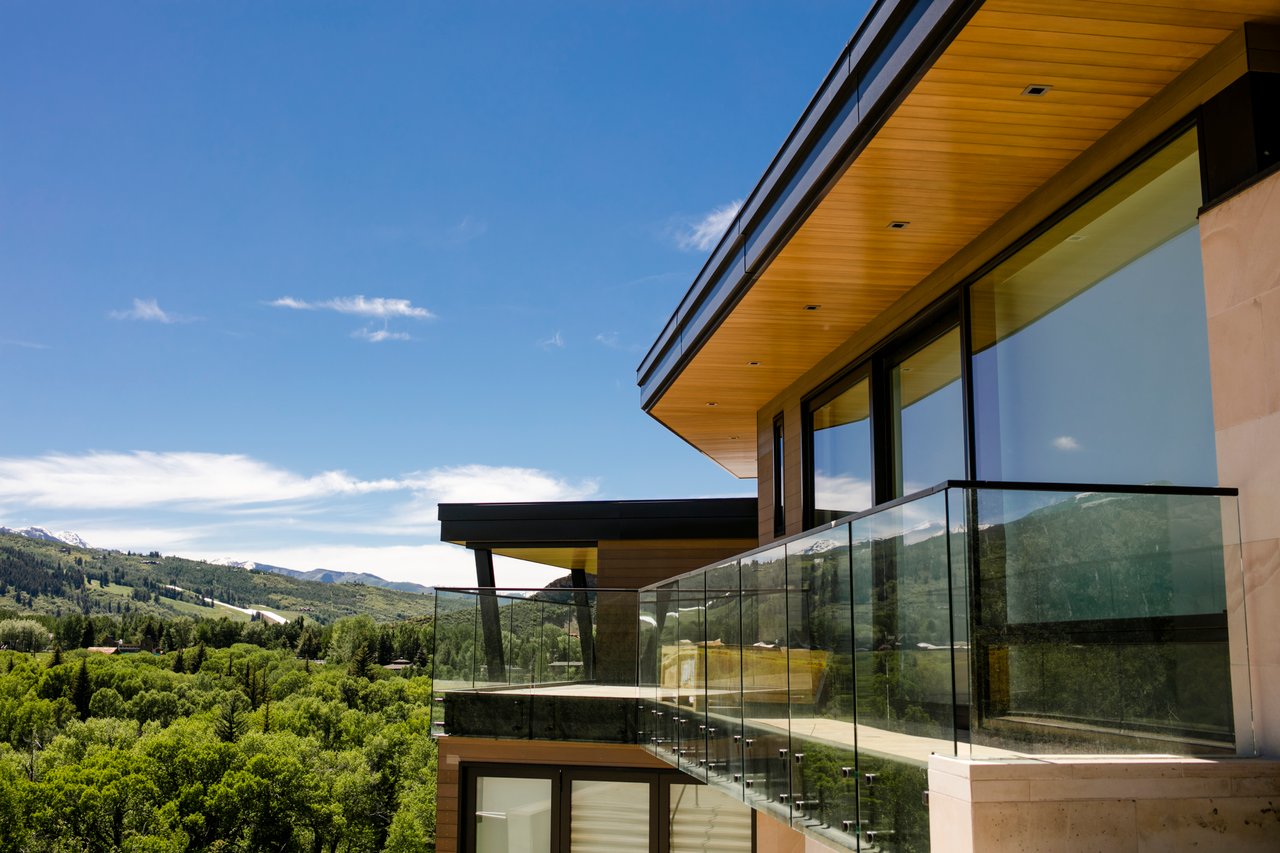
Buyers are still willing to pay top dollar for the right property. What they've lost patience for is paying a premium for a home that doesn't deserve it. A well-improved, turnkey home in a strong location still commands a premium per square foot, while a home that needs work sits.
The reason is specific to this market. Renovating in Aspen and Pitkin County is expensive and slow, and the permitting environment adds time and cost to any project. A buyer looking at a home that needs updates is underwriting a long, costly path to finished product, so they discount heavily for it or walk. Sellers of these homes price them against the finished homes selling at the top of the market, but buyers won't pay that once they factor in the cost and time of the work, and that gap is the disconnect.
What I Expect Through the Fall
Homes in the middle, the ones that need updates or aren't seen as best-in-class, will need price reductions to appease more price-sensitive buyers. I'd look for those adjustments in late summer and into fall. If enough of those sellers get motivated, transaction volume should tick back up in the closing months of the year.
Why It Takes Time Here
The complicating factor is that most buyers and sellers here are discretionary. Neither side has to act. That's what lets a standoff hold longer in Aspen than it would in a market where people are forced to transact, and it's why this takes time to work through.
This is a slower market, not a weaker one. Value is intact, and quality is still commanding a premium. What's changed is the patience of buyers to wait out anything that doesn't justify its price.
When price cuts come this fall, they won't mean the market is falling. They'll mean sellers finally moving off aspirational list prices to something realistic.